

News
What Gives Guangdong’s Enterprises the Confidence to Innovate?
What Gives Guangdong’s Enterprises the Confidence to Innovate?
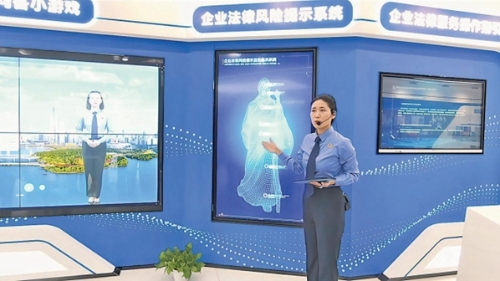
① A staff member introduces the "Interactive Display System for Corporate Legal Risk Alerts" at the Intellectual Property Branch of the Shenzhen Nanshan Rule-of-Law Business Environment Experience Center.

② This shows the dyeing process of "Xiangyunsha" (gambiered Guangdong gauze), a product protected as a national geographical indication.
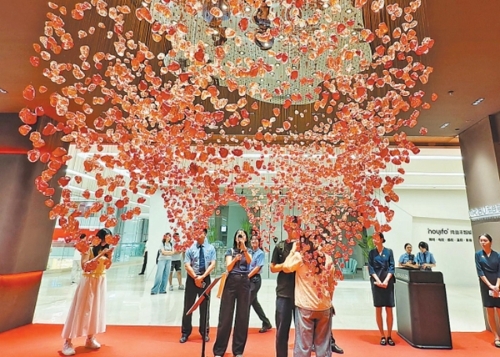
③ A Zhongshan lighting enterprise displays dazzling lighting products.
Shenzhen’s Nanshan District is home to 220 listed companies, spanning strategic emerging industries such as artificial intelligence.
Zhongshan’s lighting industry accounts for over 70% of the domestic market share, with products exported to more than 130 countries and regions.
Foshan produces one out of every 14 industrial robots made in China.
Statistics show that during the “14th Five-Year Plan” period, Guangdong’s economic output has ranked first nationwide for many consecutive years. The province also leads the country in multiple indicators, including comprehensive regional innovation capability, fully demonstrating its sense of responsibility to “lead, set an example, and bear the main burden.” What gives Guangdong’s enterprises the confidence to be daring and pioneering? Recently, a reporter followed the Supreme People’s Procuratorate’s “New Media Grassroots Tour for Procuratorial Inspection” to several locations in Guangdong and found the answer: a conducive business environment and innovation climate are crucial—especially the rule of law as the best business environment. Coordinated intellectual property (IP) protection has laid a “foundation of security” for high-quality industrial development.
Multiple Measures to Foster a Sound Environment for Innovation
Nanshan District, as the core area of Shenzhen’s high-tech industry, hosts a large number of high-tech enterprises with diverse and intensive IP protection needs.
At the Nanshan District Rule-of-Law Business Environment Experience Center, the reporter saw that corporate legal risk alerts are displayed digitally. Risks related to corporate IP and other areas are labeled like acupuncture points on a human body model; visitors can click on the corresponding “points” to learn about relevant典型案例 and practical experiences. Among them, a criminal copyright case vividly demonstrated the new model and effectiveness of enhanced IP protection by the Nanshan District prosecutorial authorities.
In 2021, a technology company in Shenzhen obtained the copyright for its A Smart Map 3D reconstruction software. To protect its innovation, the company restricted software use through activation codes and technical measures. Despite this, starting in 2022, the company found evidence of infringement: Wang XX sold plug-ins that circumvented the software’s restrictions along with bundled activation codes; Xie XX developed related crack plug-ins to bypass the software’s trial restrictions and sold them.
In September 2023, after receiving the technology company’s report, the Nanshan Branch of the Shenzhen Public Security Bureau (PSB) filed a case for investigation. The following year, the Nanshan Branch transferred Wang XX and Xie XX to the Nanshan District People’s Procuratorate for prosecution on suspicion of computer information system destruction.
While handling the case, the Nanshan District Procuratorate supplemented evidence and heard the opinions of the Shenzhen-based technology company in person. During this process, the company stated that the infringers’ actions allowed users to use the A Smart Map software long-term without paying the company additional fees, infringing its copyright. It hoped that judicial authorities would protect the company’s IP in accordance with the law.
The accuracy of case characterization affects the precision of case handling. Did this case involve the crime of destroying computer information systems or copyright infringement? To address this, the Nanshan District Procuratorate carefully analyzed the case and leveraged the Nanshan IP Protection Center, supported by a technical advisory think tank, to pinpoint the key elements for case characterization.
In February 2025, the Nanshan District Procuratorate prosecuted the two individuals for copyright infringement before the Nanshan District People’s Court. In May of the same year, the Nanshan District Court rendered a first-instance verdict, sentencing both to imprisonment and fines. Neither appealed, and the verdict has taken effect.
This case exemplifies the Nanshan District Procuratorate’s efforts to address the prominent difficulties in IP cases—“difficulty in evidence collection, case characterization, and prosecution”—through a three-pronged approach of “early intervention, coordinated action, and integration of administrative and criminal justice” to ensure swift, accurate, and effective case handling.
In recent years, the Nanshan District Procuratorate, leveraging the local characteristics of a high concentration of high-tech enterprises and a developed digital economy, has broken traditional case-handling mindsets, introduced innovative practices, and built a “Nanshan brand” for IP protection. “On one hand, in response to frequent online infringement and malicious litigation in the district, we have formulated the ‘Work Plan for Special Supervision on Punishing Malicious IP Litigation according to Law’, built a big data supervision platform for IP, integrated data from multiple departments, accurately identified malicious litigation leads, effectively curbed the abuse of litigation rights, and created a healthy rights protection environment for enterprises. On the other hand, at the Nanshan District Rule-of-Law Business Environment Experience Center, we have set up a dedicated IP protection branch. Through three major sections—‘Major IP Protection Events and Typical Cases,’ ‘IP Rights Protection Guidelines,’ and ‘Nanshan IP Protection Center Website System’—we enhance enterprises’ awareness of IP protection and provide them with IP protection pathways,” said Huang Baijia, Deputy Director of the Fifth Procuratorial Department of the Nanshan District Procuratorate. Over the past three years, the procuratorate has focused on high-quality case handling, strictly punished IP crimes according to the law, handled a large number of IP cases, and produced several national- and provincial-level typical cases. In April 2026, the Wang and Xie copyright infringement case was selected by the Supreme People’s Procuratorate as a typical case of prosecutorial services supporting new quality productive forces.
Multi-Party Coordination to Build Synergy in IP Protection
“Strengthening IP Protection in Emerging Fields to Accelerate the Development of New Quality Productive Forces”—this slogan was particularly eye-catching during the 2026 National IP Publicity Week at the Star Alliance Global Brand Lighting Center in Guzhen Town, Zhongshan City. The center houses over 600 lighting brands, displaying a dazzling array of lighting products that attract domestic and international buyers. For fiercely competitive lighting brands, what does enhanced IP protection mean?
“In the past, we focused more on production and the market, and we didn’t fully appreciate the importance of IP protection, which cost us dearly. In recent years, government departments have come to guide us, explain policies, and conduct special training. We have come to realize that IP is a company’s core asset. Only by protecting innovation outcomes can an enterprise move steadily and far,” said Guan Kejie, Assistant General Manager of Zhongshan Songwei Lighting Electric Appliance Co., Ltd., who has over a decade of experience in the lighting industry.
“Previously, when our designs were counterfeited, we had to go through notarization, hire lawyers, and file lawsuits on our own. By the end of the ordeal, the infringed lighting products were already outdated and no longer popular. Even if we won, the compensation was minimal. But now it’s different—the most noticeable change is speed. When we discover product infringement, we no longer rush to court. Instead, we submit evidence to the Zhongshan Lighting IP Protection Center (the ‘Center’). They adhere to the principle of mediation first and prioritize administrative mediation. If criminal activity is suspected, the Center leverages the ‘rapid coordination’ mechanism established with the procuratorate to directly transfer leads to prosecutors for legal supervision. This significantly shortens the rights protection cycle for companies and reduces costs, allowing them to dare to innovate and innovate with peace of mind,” Guan Kejie told the reporter.
Lighting products have a rapid renewal cycle, so manufacturers need not only swift rights protection but also fast IP authorization. “Previously, when companies filed design patent applications through ordinary procedures, the examination took a relatively long time. But with the help of the fast-track pre-examination channel at the IP Protection Center, the authorization time for lighting-related design patents has been greatly reduced,” said Liang Dejian, Director of the Center. In addition to helping companies combat infringement, the Center also collaborates with the procuratorate on preventive services, inviting prosecutors to give special lectures on IP law. The procuratorate has created a “Caring for Enterprises” platform, offering on-demand legal education, and places special brochures on IP and trade secrets at the Center. These joint outreach efforts help more lighting companies “not want to infringe, and not dare to infringe.”
“In addition to setting up an IP protection office at the Center to coordinate rights protection and legal outreach, we also actively implement reverse connection between administrative and criminal justice when handling IP cases. For example, after making a non-prosecution decision for certain minor infringement offenders, we review each non-prosecuted case for the necessity of administrative penalties to avoid the situation where a non-prosecution means no penalty,” said Liu Jiaquan, Deputy Director of the Second Procuratorial Department of the Zhongshan Second City District People’s Procuratorate. Since 2020, the procuratorate has transferred 15 leads related to lighting infringement to administrative authorities, using the “reverse connection” mechanism to bridge gaps between administrative law enforcement and criminal justice, thereby strengthening full-chain IP protection.
With the Rights Protection Center serving as the “outpost” and the procuratorate providing a strong “backstop,” this combined approach has helped Zhongshan’s lighting enterprises transition from “having no idea about protection and no path to enforcement” to “having protection awareness, well-established systems, and industry benchmarks,” continuously optimizing the IP ecosystem in the lighting industry.
Targeted Services to Mitigate Corporate IP Risks
Foshan is a major manufacturing hub where many innovations emerge, but IP disputes are also relatively common. The Foshan prosecutorial authorities use targeted, precision IP services to help local manufacturing enterprises thrive.
“To strengthen criminal IP protection for enterprises, the Foshan procuratorate, based on enterprise needs, delivers prosecutorial services directly to their doorsteps. On one hand, we deepen transparent and standardized mechanisms for contacting enterprises, fully leverage the 12309 Procuratorial Service Center, and establish a ‘green channel’ for enterprise legal services. On the other hand, we actively visit local companies such as Midea Group, conduct legal outreach sessions with enterprises and chambers of commerce, and enhance corporate awareness of IP protection. Additionally, we maximize the advantages of grassroots prosecutorial offices, improve government-procuratorate coordination and mediation mechanisms through comprehensive governance centers, focus on resolving IP-related disputes faced by local enterprises, and provide targeted IP legal services,” said Liu Xuan, Prosecutor of the Second Procuratorial Department of the Shunde District People’s Procuratorate, Foshan City.
“As an innovation-driven enterprise, Midea Group has an urgent need for IP protection. The Foshan City and Shunde District procuratorates have focused on comprehensive judicial protection of IP by establishing IP protection contact points, facilitating corporate criminal IP protection. Moreover, various legal outreach activities conducted by the procuratorate have helped Midea further improve its IP management system, strengthen risk controls, and recover economic losses caused by infringement,” said Yan Licheng, Head of Legal Dispute Resolution at Midea Group.
The precision services provided by the Foshan City Procuratorate and the Shunde District Procuratorate are also exemplified in the public interest litigation case involving the protection of the nationally protected geographical indication product “Xiangyunsha” (gambiered Guangdong gauze).
“In handling this case, first, after receiving reports of Xiangyunsha product infringement, the procuratorate coordinated with market regulation, public security, and other departments to carry out special operations, seized counterfeit products, and deterred illegal activities. At the same time, the procuratorate facilitated the improvement of Xiangyunsha-related standards and the development of a traceability system,” said Chen Xiaoliang, Vice President of the Shunde District Lunjiao Xiangyunsha Association. Previously, authentic Xiangyunsha was hard to distinguish from counterfeits, leaving consumers unable to verify authenticity. Now, with the joint efforts of multiple departments, Xiangyunsha authentication standards have been gradually improved, a product traceability system has been launched, and consumers can scan QR codes to verify authenticity. The first five Xiangyunsha enterprises have been granted official ‘golden QR codes,’ better protecting the ‘golden brand’ of Xiangyunsha.
“The protection of geographical indications and intangible cultural heritage requires the joint participation of judicial authorities, market regulation departments, cultural departments, and others. We will continue to fully leverage the collaborative advantages of public interest litigation, using consultation meetings, procuratorial suggestions, and other methods to encourage administrative agencies to perform their respective duties, making coordinated IP protection a powerful driver for the innovative development of traditional cultural industries,” said Shen Xiaofan, Procurator of the Public Interest Litigation Division of the Shunde District People’s Procuratorate, Foshan City.

scan my wechat
